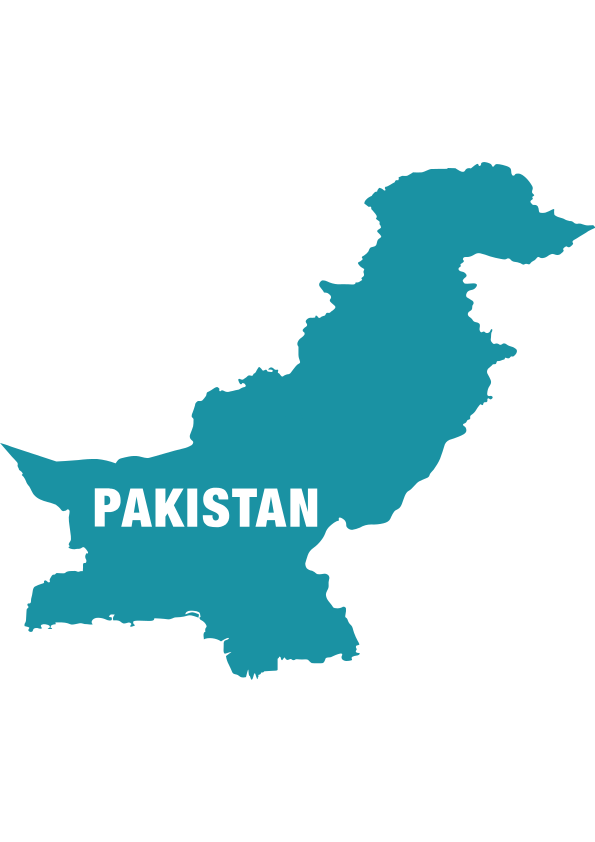
Pakistan
- Prevalence of FGM/C: No official data reported. Small-scale studies have shown that FGM/C or khatna is practised within the Dawoodi Bohra community. News reports also suggest that FGM/C is practiced amongst the Sheedis.
- Types of FGM/C thought to be practised: Amongst the Dawoodi Bohra, the most widely practised form is Type I. There are also reports of Type IV.
- Legal status of FGM/C: Legal status of FGM/C: No specific national legislation prohibiting FGM/C. It could be construed as ‘hurt’ under The Pakistan Penal Code (1960; amended 2012), Article 332. In 2006 the Government acknowledged that FGC does occur in the country when it introduced into The National Plan of Action for Children a goal of eradicating the practice by 2010. It seems this is the only government document to mention the issue.
- Relevant policies relating to FGM/C: No specific national policies or initiatives.
- International commitments to end FGM/C:
- Sustainable Development Goals Target 5.3: Eliminate all harmful practices, such as child, early and forced marriage and FGM/C.
- Voluntary national reporting indicator 5.3.2: Proportion of girls and women aged 15-49 years who have undergone FGM/C, by age.
- Convention on the Elimination of all forms of Discrimination Against Women (CEDAW): Ratified in 2013.
- Convention on the Rights of the Child (CRC): Ratified in 1990.